AbastoERP
A cloud ERP for fruit, vegetable and grocery wholesalers, with a separate database per client.
- Type
- Xenotech's own product
- Sector
- Wholesale markets
- Platform
- Frappe · ERPNext · AWS
- Period
- 2026 — present
- Status
- In production
Built for fresh produce wholesale
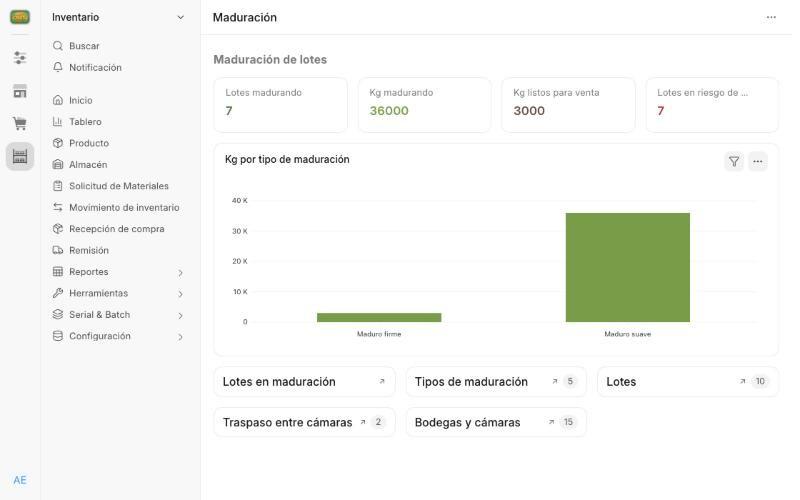
Batch ripening
A dedicated dashboard for what a generic ERP doesn't cover: fruit ripening in chambers.
- Batches and kilos ripening, and kilos ready for sale
- Batches at risk, at a glance
- Ripening types, warehouses, chambers and transfers between chambers
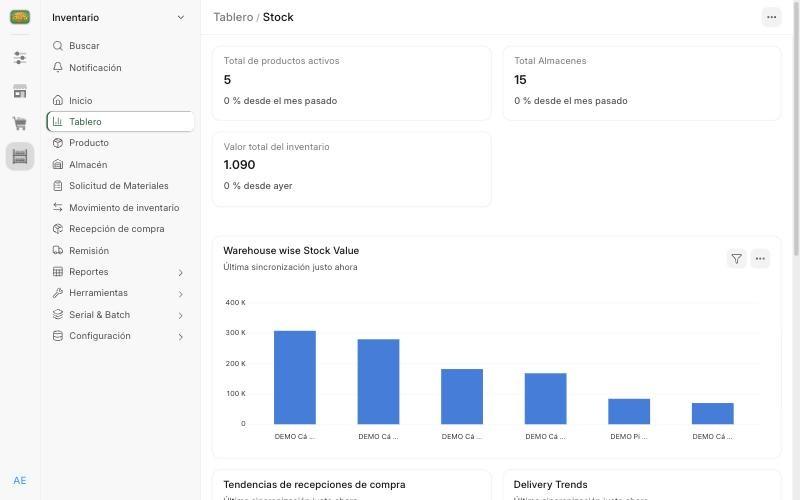
Inventory
Products, warehouses and inventory value, with its dashboard.
- Stock value by warehouse
- Purchase receipts and delivery notes
- Interface translated into Mexican Spanish
One client, one site and one database
Each wholesaler is onboarded from the master account. Their data never shares a database with another client's.
Where we started
Generic ERPs don't speak the language of wholesale at a produce market, nor do they come in Mexican Spanish. And each wholesaler needs their data completely separate from everyone else's.
It customizes an open-source ERP without touching its core, so it stays updatable.
What we built
Per-client isolation
Each client has its own site and its own database, under its subdomain.
Master account
An administration site to onboard and operate clients.
Configurable branding
Logo, favicon and color per client.
Mexican Spanish
More than two thousand system strings translated; none left untranslated.
Production infrastructure
ECS Fargate, Multi-AZ database, separate Redis for cache and queues, and shared storage.
Untouched core
The open-source ERP is customized without modifying its core, so it can keep being updated.
- Client onboarding
- Own site
- Own database
- Own branding
SDD and harness engineering
Every feature starts as a specification signed off by the client, becomes tests before any code is written, and is implemented by AI agents inside that harness. An independent verifier and a person approve every delivery.
- Platform
- Frappe · ERPNext · Python
- Compute
- AWS ECS Fargate
- Data
- RDS MariaDB Multi-AZ · Redis
- Network
- ALB · Route 53